

All solutions here are suggested. Mr. Teng will hold no liability for any errors. Comments are entirely personal opinions
Numerical Answers (workings/explanations are after the numerical answers. Click to expand.)
Question 1: 
Question 2:
Question 3: 
Question 4:  or
or  ;
; 
Question 5: 
Question 6: 
Question 7: 
Question 8: 
Question 9: 
Question 10: 
Question 11: 
Question 12:  ; cannot see since
  ;
;  ; no
; no
Total marks: 4 marks
Since
 is an asymptote, then
At
 , we have

At
, we have 
Using GC,
Note: Students can verify this answer by plotting the graph.
Total marks: 3 marks
Since  is a unit vector, then
  .
.
Since  , then

 , where
  is the angle between and


Thus, and are perpendicular to each other.
Total marks: 4 marks
(a) For  to be a root, we must be able to apply conjugate root theorem. Thus, all coefficients of the polynomial should be real numbers. We have that
  .
.
(b) ![[z - (-1+2i)][z - (-1 - 2i)](z-3)](http://theculture.sg/wp-content/ql-cache/quicklatex.com-1907ed12ddf031477b7e7a9631ddae83_l3.png "Rendered by QuickLaTeX.com")


Thus, 
Note: Students can verify this answer by using the GC’s polynomial root finder function
Total marks: 6 marks
(a)
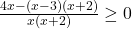
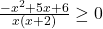

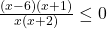
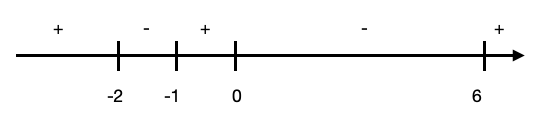
or
(b)
Replace  by
by 
 (rejected,
  or
or 

Note: Students can verify this answer by plotting the graph.
Total marks: 7 marks
(a) 





(b) Using GC, since  ,
,  and
and 
(c) Note that  is a GP with first term
  and common ratio
  .
.
![80 \cdot \frac{ 24( - \frac{1}{3})^{k+1-1}}{1 + \frac{1}{3}} = \frac{24[ 1 - ( -\frac{1}{3})^k]}{1 + \frac{1}{3}}](http://theculture.sg/wp-content/ql-cache/quicklatex.com-57ddbc12b21e83fcb2205a798365aba0_l3.png "Rendered by QuickLaTeX.com")
![80 ( - \frac{1}{3})^k =[ 1 - ( -\frac{1}{3})^k]](http://theculture.sg/wp-content/ql-cache/quicklatex.com-59316ce44254068253cb6e0e9c9b1d61_l3.png "Rendered by QuickLaTeX.com")



Total marks: 8 marks
(a) 

When 
Tangent at  is given by


Thus, 
(b) Since the tangent cuts the origin, then
(c)
Required area![= \int_0^1 2e^{x^3} + 4e - [e(6x-4) + 4e]~dx \approx 5.4 \text{units}^2](http://theculture.sg/wp-content/ql-cache/quicklatex.com-99aa10433e19a8b0e4f30e30f484ed0b_l3.png "Rendered by QuickLaTeX.com") , using GC.
, using GC.
Total marks: 8 marks
(a)




(b) Note: there are some issues with the rendering here, you should do method of difference.
![= \frac{1}{2\sin \theta} \sum_{r=1}^n [f(2r-1) - f(2r+1)]](http://theculture.sg/wp-content/ql-cache/quicklatex.com-742575a8d4fa1777dc3807ac5357dd37_l3.png "Rendered by QuickLaTeX.com")

![[ f(1) - f(3) + f(3) - f(5) + f(5) - f(7) + \ldots + f(2n-3) - f(2n-1) + f(2n-1) - f(2n+1)]](http://theculture.sg/wp-content/ql-cache/quicklatex.com-3b44e023ebb9fc7c66f7147c6fe13a01_l3.png "Rendered by QuickLaTeX.com")
![= \frac{1}{2\sin \theta} [f(1) - f(2n+1)]](http://theculture.sg/wp-content/ql-cache/quicklatex.com-4099a6eff24a73e7ffd0871ac773f377_l3.png "Rendered by QuickLaTeX.com")
![= \frac{1}{2\sin \theta}[ \cos \theta - \cos (2n+1)\theta ]](http://theculture.sg/wp-content/ql-cache/quicklatex.com-ac03a345be6c2f9ee44fcb14efb076d3_l3.png "Rendered by QuickLaTeX.com")

(c)




Observe that  .
.
Thus, the possible values are
Note: Students can verify this answer by calculating the sigma with the GC.
Total marks: 9 marks
(a) 

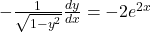






Thus, 
(b)
When 
Thus, 
Note: we can verify the answers using standard series in exam.
![\approx \cos [1 - (2x + 2x^2)}]](http://theculture.sg/wp-content/ql-cache/quicklatex.com-9a8736f0d9b2321c904d07cf2e2a7bb6_l3.png "Rendered by QuickLaTeX.com")
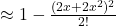

(c) 


By comparing,  and
and  .
.
Total marks: 10 marks
(a)

 , and
, and 
(b)
Let  , then

Thus, coordinates are  .
.
(c) Observe that when 



![= \bigg[ \frac{12}{5} t^5 + \frac{10}{4} t^4 + \frac{2}{3} t^3 \bigg]_0^2](http://theculture.sg/wp-content/ql-cache/quicklatex.com-687fb6d212dbde4968d0f9b1406c769e_l3.png "Rendered by QuickLaTeX.com")

Total marks: 14 marks
(a) 


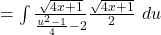
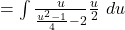
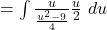

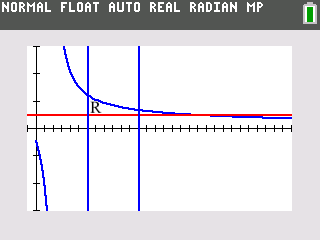
(b) The axial intercepts are  , and the asymptotes are
  and
and  .
.
(c)


![= \bigg[ 2u +18 \times \frac{1}{2(3)} \ln \frac{u - 3}{u+3} \bigg]_5^7 - 3](http://theculture.sg/wp-content/ql-cache/quicklatex.com-5bd7f774b6f67aed044d2c19d9fb0472_l3.png "Rendered by QuickLaTeX.com")


Thus, 
(d) using GC.
Total marks: 12 marks
(a)(i)
Thus, 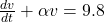
(a)(ii) We have that 
(b)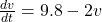




 , where
Let 


Thus,  and
and 
(c)


When 
Let  , using GC,
  seconds
Total marks: 15 marks
(a) Let  be the points nearest to the controller and let
  be the controller.
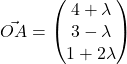 for some
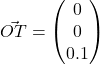
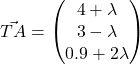
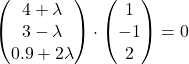

Thus, the coordinates of is .
(b) 

Thus, the controller will not be able to see.
(c) (i) Clearly, the paths are not parallel. Now suppose the path intersect, then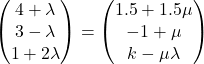
We have that 

Solving,  and
and  . Thus
  .
.
Thus, 
(c) (ii)
Required angle 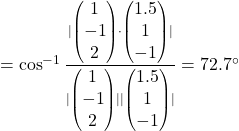
(d) (i)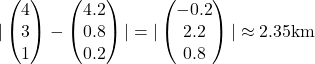
(d) (ii)
For the distance to be the shortest, the resultant vector  should be perpendicular to both the paths.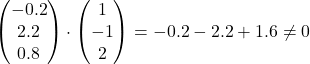
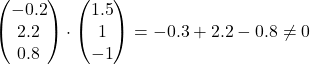
Since the resultant vector is not perpendicular to both the paths, the distance found is not the shortest.


Hi, for 11(b) B should be -2 if I remember correctly? Because in the question, exponent for e^Bt had no negative sign in front of the B.
I also need to verify if Q9(c) definite integral range is from 0 to Q or P to Q. Because I may have misread the question during the paper but I did from P to Q.
I’m not sure if you have access to the paper exactly as it is, in that case, my information could be wrong.
Hello, actually I can’t recall whether they had a negative sign in from of the exponent too. For 9c, I think it was 0 to Q, but I may have recalled wrongly too.
Hello, for qn 6 (c), was the answer supposed to be in 1dp/2sf? I recall giving mine to 3sf as 5.40
hello. its to 1 decimal places.