

All solutions here are suggested. Mr. Teng will hold no liability for any errors. Comments are entirely personal opinions
Numerical Answers (workings/explanations are after the numerical answers.)
Question 1: 
Question 2: 
Question 3: 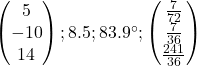
Question 4: 
Question 5: A and B, or A and D; B and C; A and B, or A and D; not independent
Question 6: 
Question 7: 
Question 8:  , reject
Question 9: 
Question 10: 
(a)
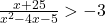
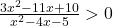
Method 1: Algebraic





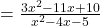
Method 2: Graphical
(b)


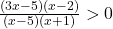

(a)





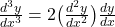 (shown)
(b)
When 

(c)(i)


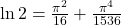
(c)(ii)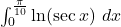
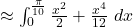
![= \big[ \frac{x^3}{6} + \frac{x^5}{60} \big]_0^{\frac{\pi}{10}}](http://theculture.sg/wp-content/ql-cache/quicklatex.com-3f4f8efc177284dd533ebc4dbac21516_l3.png "Rendered by QuickLaTeX.com")

(a)

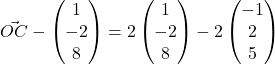
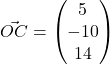
(b)
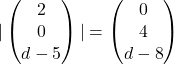




(c) 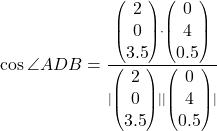


(d) Using (b), we recognise that we are inscribing an isosceles triangle with AB as the base in the circle to find the center. We let  be the mid point of AB and
  be the radius of the circle.
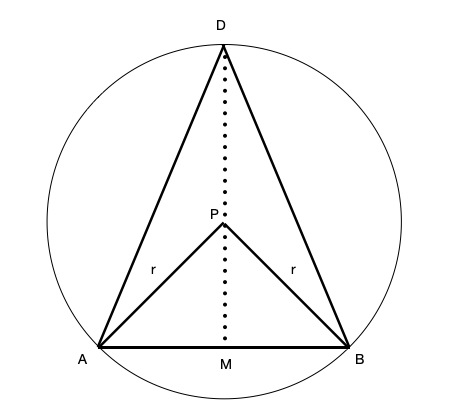
Method 1: Pythagoras’ theorem
From (c), we found that  and
and  .
.
By Pythagoras’ Theorem, 


By Pythagoras’ Theorem,




Thus, the ratio of 
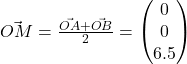
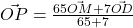
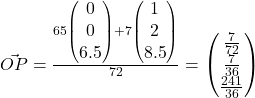
Method 2: Vector equation of a line
We have that 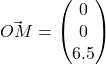 , then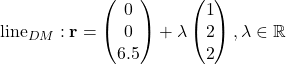
We let 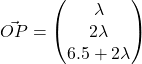 for some
  .
.

Since  ,
, 
Using GC, we find no solutions. So we should consider DP instead.
We let 

Using GC,  . Thus,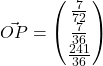
(a)
Using GC, we can find that when  and
and  .
.


![= \bigg[ \frac{20}{3} t^3 - 2t^2 \bigg]_{0.2}^3](http://theculture.sg/wp-content/ql-cache/quicklatex.com-946164f87865bf1d340b36e4ba2c3f13_l3.png "Rendered by QuickLaTeX.com")

(b)

Since they intersect, we can equate the  and
and  coordinates, we have
 and
and  .
.



Using GC,  , and
, and  .
.
Thus,  . Since the above cubic equation only has one solution, we can conclude that there are no other solutions for
  for which
  and
and  intersect.
(c) Using GC, at 
Equation of tangent: 
Since it meet curve D, 


Using GC,  or (rejected since this is A)
The required coordinates are 
 and we can observe that
  .
. and we can observe that
  .
. and we can observe that
  .
. and we can observe that
  .
.
(a)(i)A and B are mutually exclusive events. A and D are also mutually exclusive events.
(a)(ii)

Since  , we have that A and C are independent events.
Since B is the complement of A and we have the A and C are independent events, then we have that B and C are independent events as well.
(b) We can update the elements. and we can observe that 
 and we can observe that
 and we can observe that
 and we can observe that
(i) Thus, A and B are mutually exclusive events. A and D are also mutually exclusive events.
(ii)

Since  , we have that A and C are no longer independent events.
(a)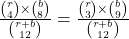

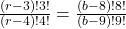



(b)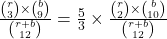


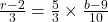


Solving simultaneously, we find that  and
and 
Thus the required probability 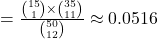
(a)(i)
Using the GC, product moment correlation coefficient 
(a)(ii)
Using the GC, product moment correlation coefficient 
(b) The model  is a better fit to the data as the magnitude of the product moment correlation coefficient is closer to 1 which suggests a stronger positive linear correlation. Further we observe that the values of increase decreasingly as increases.
Using GC, 
(c)
Let 
There are 8.87 million subscriptions in 2024. This estimate is not reliable as  does not fall in the data range of
  .
.
(a)(i)
Let  be the population mean weight of granulated sugar.
Test 
against 
where is the null hypothesis and  is the alternative hypothesis.
(a)(ii)
Since the distribution of the masses of each bag of sugar is unknown, a sample of 10 bag of sugar will not be sufficiently large as it is  for the sample mean to be approximated to a normal distribution by central limit theorem,
The sample collected by the manager will not give a random sample as the chance for each bag to be selected is not equal and selection is not independent of each other. This will give rise to bias.
(b)(i)
Let  denote the sample mean masses of sugar.
We first find that 
Test 
against  at 2.5% level of significance.
Under , since sample size  is sufficiently large, by central limit theorem
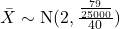 approximately.
Test statistic, 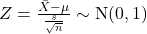
For to be rejected,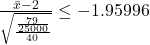


Thus the critical region is 
(b)(ii)
Since  falls in the critical region found in (b)(i), we reject at 2.5% significance level and conclude with sufficient evidence that mean mass of sugar are less than 2kg.
(a) Let  denote the length of regular and long planks respectively, in m.
Required probability 
(b) Let 
Required probability 
(c) Let 
Expected number of planks 
(d) Let 



Required probability 
(e) Let 
Required probability 
(f) We let  denote the wastage, and since
  , when there is wastage, we observe that the variance of
  will increase. This will lead to the probability found to be higher.
(a)(i)
The event that a randomly chosen ornament turns out to be faulty is independent of the event that another randomly chosen ornament turns out to be faulty.
The probability that a randomly chosen ornament turns out to be faulty is constant, throughout the the sample.
(a)(ii)
mean 
variance 
difference 
(a)(iii)
Let  be the number of faulty ornaments, out of 50 ornaments.
Required probability 
(a)(iv)
Let  be the number of days where there are no more than 2 faulty ornaments, out of 5 days.
Required probability 
(a)(v)
Let be the number of faulty ornaments, out of  ornaments.
Required probability 
(b) Let  denote the event that the box is accepted.
For Lu,


For Ming,


Consider 
![= p^3 + 3p^5(1-p)^2 - [p^6 + 6p^5(1-p)]](http://theculture.sg/wp-content/ql-cache/quicklatex.com-e01827ce69a62b85556c5fa878893051_l3.png "Rendered by QuickLaTeX.com")
![= p^3[1 + 3p^2(1 - 2p + p^2) - p^3 - 6p^2(1-p)]](http://theculture.sg/wp-content/ql-cache/quicklatex.com-cd5c77d1acd42247c1e20c4fd02dc187_l3.png "Rendered by QuickLaTeX.com")
![= p^3[1- p^3 - 3p^2(1-p)]](http://theculture.sg/wp-content/ql-cache/quicklatex.com-4e2b1a337a0437d7bbbf401979539695_l3.png "Rendered by QuickLaTeX.com")
![= p^3[(1-p)(1+p+p^2) - 3p^2(1-p)]](http://theculture.sg/wp-content/ql-cache/quicklatex.com-9cdf4a4be0cc7352d1ef2f152ffa94da_l3.png "Rendered by QuickLaTeX.com")


 for
for  .
.
Thus we have that 


[…] 2023 A-level H2 Mathematics (9758) Paper 2 […]
Leave a CommentCancel reply
hello!! would you mind making solutions for H1 math too? thank you lots!! :))
Hi, I did do the stats for my h2 math students to try. Haven’t got time to do the pure math section though.
2023 A-level H1 Mathematics (8865) Paper 2 Suggested Solutions
Hi…When r you uploading the answer for paper 2? Thankz in advanced!
Hello, I just started doing. Had other commitments to attend to the whole day. Will try my best.
Can we expect to see the suggested solutions by next week? Thank you
Hello, I just started doing. Had other commitments to attend to the whole day. Will try my best.
hello! do you mind making the answers for todays h2 math paper 2? thank you 😊
Hello, I just started doing. Had other commitments to attend to the whole day. Will try my best.
hi for the hypo testing qn, is the given s^2 value in your solution = n/n-1 (sample variance)? thank you
hello, nope, we can apply .
.
hi, isn’t that equal to (n/n-1)(sample variance) as well?