

All solutions here are suggested. Mr. Teng will hold no liability for any errors. Comments are entirely personal opinions. Sorry, due to copyrights issues, I cannot share the paper.
Numerical Answers (workings/explanations are after the numerical answers.)
Question 1: 
Question 2: 
Question 3: 
Question 4: 
Question 5:  ; refer to solutions below for explanation.
Question 6: 
Question 7: 
Question 8: 
Question 9: 
Question 10: 
Question 11: 
(i) [Maximum marks: 2]
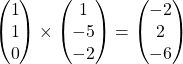
(ii) [Maximum marks: 2]
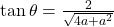
Required angle 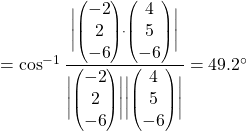
Note/ Comment: For (i), if students simplified, it is ok since the questions simply asked for a vector normal to the plane.
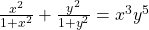
Differentiating with respect to  ,
,

Let 

 , where
Note/ Comment: Slightly tedious but fully manageable. A more elegant approach will be to consider

and differentiate from here.
(i) [Maximum marks: 3]

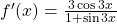



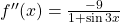

(ii) [Maximum marks: 4]



Note/ Comment: Quite a standard question. Students can verify their answers using the standard series too.
![\ln(1 + \sin 3x) \approx \ln( 1 + (3x) - \frac{1}{6}(3x)^3 ) \approx (3x) - \frac{1}{6}(3x)^3 + \frac{1}{2}[(3x) - \frac{1}{6}(3x)^3]^2 + \frac{1}{3} [ (3x) - \frac{1}{6}(3x)^3]^3 + \ldots](http://theculture.sg/wp-content/ql-cache/quicklatex.com-c9df2d8d806f24114a6cb5c4b497b927_l3.png "Rendered by QuickLaTeX.com")
(i) [Maximum marks: 4]
We can first convert all the given complex numbers to exponential form.




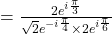


*Another approach is to straightaway solve for  and
and  .
.
(ii) [Maximum marks: 3]


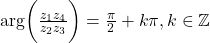





 , and
, and
![z_4 = \sqrt{2} \bigg[ \cos (-\frac{11\pi}{12} + i \sin (- \frac{11\pi}{12})\bigg]](http://theculture.sg/wp-content/ql-cache/quicklatex.com-acf5833f07cffc3ad0a33fa991d8c275_l3.png "Rendered by QuickLaTeX.com")
* Another approach is to observe that 
Note/ Comment: This can be tedious if the student did not use exponential form to get around things. For (ii), the question has stated “possible values” which is a hint that there is more than one answer to be expected. Aside from it, students should use GC to check their answers.
(i) [Maximum marks: 2]
We have that  , so
, so  is parallel to
  and
and  where
where  is a scalar.
(ii) [Maximum marks: 3]

R is a set of points lying on a line that passes through position vector  and is parallel to direction vector
  , where
  is a scalar parameter.
(iii) [Maximum marks: 4]

R is a set of point lying on a plane that passes through position vector  and is perpendicular to normal vector
  , where
  units is the shortest displacement R is from the origin.
Note/ Comment: Quite a standard question, from the specimen paper and also from 2017 A’levels paper. Students should be able to answer this comfortably.



By comparing the coefficients, 





Other root  and
and  and
and 
Note/ Comment: Actually this question did not prohibit the GC, so the last part could be done easily.
(i) [Maximum marks: 1]

(ii) [Maximum marks: 4]

![= \bigg[ x(2x + \frac{1}{4}\cos 4x) \bigg]_0^{\frac{\pi}{2}} - \int_0^{\frac{\pi}{2}} (2x + \frac{1}{4}\cos 4x) ~dx](http://theculture.sg/wp-content/ql-cache/quicklatex.com-465f322875173f7020db7e17e3884b19_l3.png "Rendered by QuickLaTeX.com")
![\frac{\pi}{2} ( \pi + \frac{1}{4}) - \bigg[ x^2 + \frac{1}{16} \sin 4x \bigg]_0^{\frac{\pi}{2}}](http://theculture.sg/wp-content/ql-cache/quicklatex.com-3e99b9d4402b5cff8022396ca5a9f8c5_l3.png "Rendered by QuickLaTeX.com")

(iii) [Maximum marks: 4]



![= \bigg[ 4x + \frac{1}{2}\cos 4x + \frac{1}{2}x - \frac{\sin 8x}{16} \bigg]_0^{\frac{\pi}{2}}](http://theculture.sg/wp-content/ql-cache/quicklatex.com-aee2a61bf195920cc0d469fb2979df47_l3.png "Rendered by QuickLaTeX.com")


Note/ Comment: Students should use GC to check their answers.
(a)(i) [Maximum marks: 2]


(a)(ii) [Maximum marks: 3]

![= \frac{50}{2}[8 + 49(1.5)] - \frac{20}{2}[8 + 19(1.5)]](http://theculture.sg/wp-content/ql-cache/quicklatex.com-ec643004a403f3f0654a11f7b60b27f1_l3.png "Rendered by QuickLaTeX.com")

(b)(i) [Maximum marks: 2]

(b)(ii) [Maximum marks: 5]
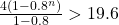





Smallest possible  .
.
Note/ Comment: Standard question.
(i) [Maximum marks: 1]
Consider the lines  and
and  , since the gradient
  , where
  is the angle the line makes with the horizontal and the two lines and are perpendicular, i.e.,
  radians spaced from each other. We have that
  .
.
(ii) [Maximum marks: 3]








Since  , required set
(iii) [Maximum marks: 3]
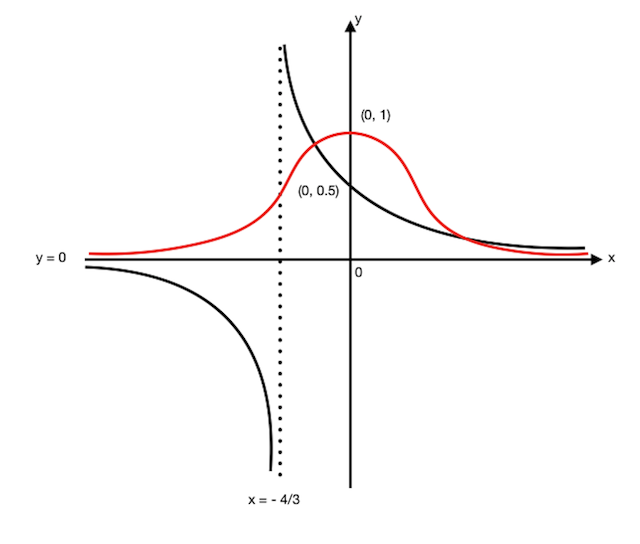
Note: Right side of the graph. The asymptote is y=0, I do not know why wordpress cut it off. 🙁
(iv) [Maximum marks: 5]
Using GC, 

![= \bigg[ \tan^{-1} x - \frac{2}{3} \ln \vert 4 + 3x \vert \bigg]_{-0.5}^2](http://theculture.sg/wp-content/ql-cache/quicklatex.com-ac7cc8e0beb8cc94bbf2f4b9d7913987_l3.png "Rendered by QuickLaTeX.com")

(i) [Maximum marks: 2]
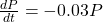
(ii) [Maximum marks: 4]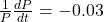


 , where
  is an arbitrary constant.
In the long run,  , The number of sheep will decrease and approach 0.
(iii) [Maximum marks: 2]

(iv) [Maximum marks: 4]


 where is an arbitrary constant.

(v) [Maximum marks: 2]
In the long run, 

Note/ Comment: This question is quite difficult to interpret, but once you understand, it should be manageable.
(i) [Maximum marks: 3]
Let  and
and  , then




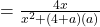

(ii) [Maximum marks: 3]
Differentiate with respect to ,

Let 


(iii) [Maximum marks: 1]
There are other external factors such as the strength of the kick, or wind, etc.
Note: I personally cannot think of a mathematical reason. Please share with me if you do. So I guess anything logical is fine.
(iv) [Maximum marks: 3]
 .
.
When 
(v) [Maximum marks: 2]




I wanna read the comment
you will have better luck at reddit
For the DE question, if i got the equation wrong but the steps in ii correct and deduced that overtime population approaches 0, will i get any mark.
you should. But the model will probably be wrong since math in general does not carry ecf.
does a wrong DE but correct way of solving DE get marks, thanks!
Given the marks distribution for the question, quite tough.. :/ Since the method to solve the DE was variable separable.
regarding question 2, if i did all steps correctly just during differentiation i carelessly left out the dy dx on the product side of the equation, will there be ecf? or will the 6 marks just fly away like that 🙁 thank you for your reply and the answers!
it won’t just fly away. if your method to find tangents, etc are correct. there will be marks.